
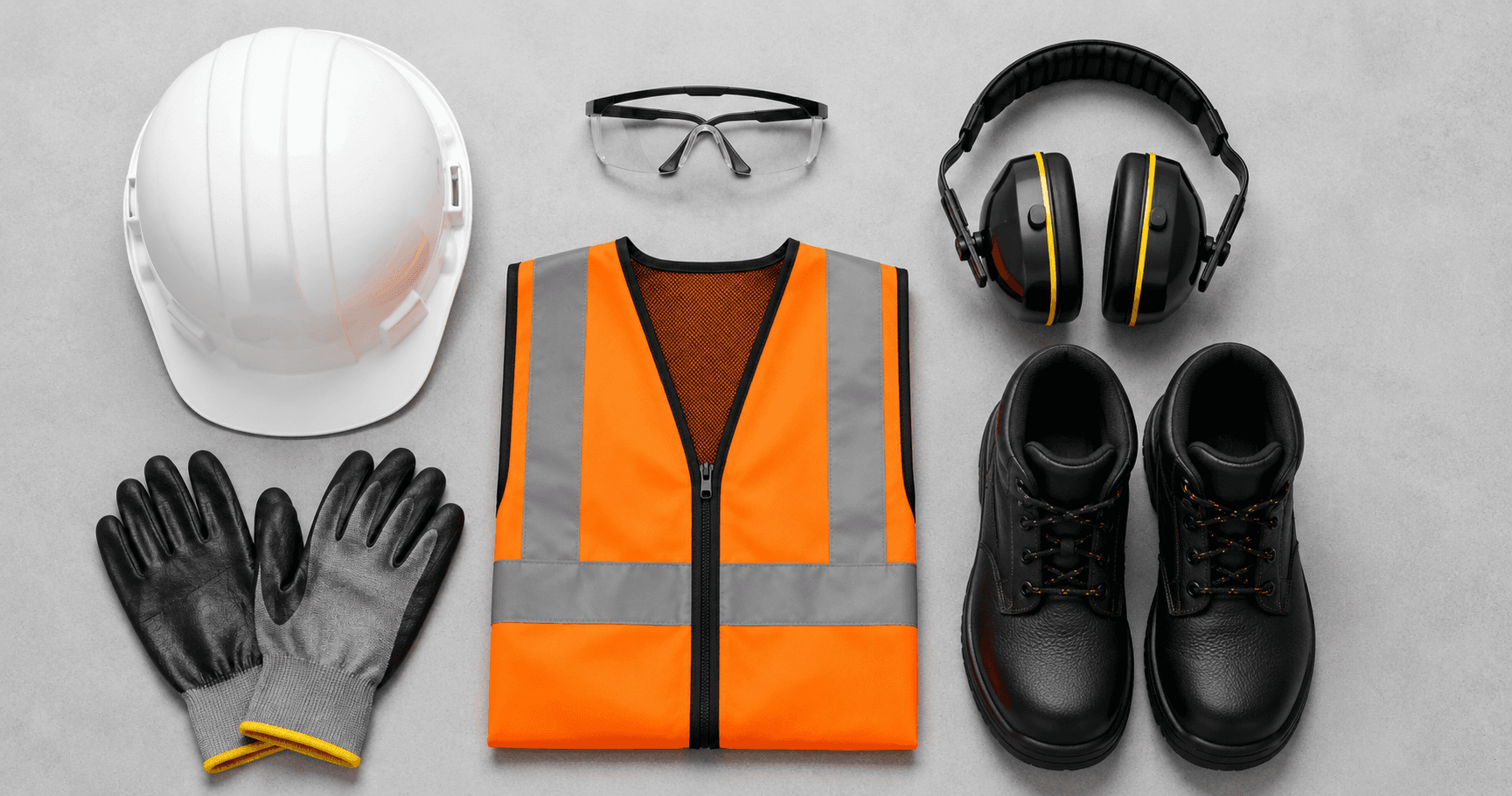
Why PPE Alone Isn't Enough
Personal protective equipment sits at the bottom of the hierarchy of controls for a reason — it's the last line of defence, not the first. But when engineering and administrative controls can't eliminate a risk entirely, PPE becomes essential, and it only works if it's backed by a clear, enforced policy.
What a Strong PPE Policy Covers
An effective PPE policy should clearly define:
- Which PPE is required for each task or area, based on a documented risk assessment.
- Correct fitting, storage, and inspection procedures for each type of equipment.
- Replacement schedules and how to report damaged or worn-out gear.
- Training requirements so employees understand not just what to wear, but why.
- Consequences for non-compliance, applied consistently across all levels.
Making Enforcement Actually Work
A policy on paper doesn't protect anyone — enforcement does. Here's what makes it stick:
Lead by Example
When supervisors and managers follow PPE rules visibly, compliance across the workforce improves significantly.
Make Compliance Easy
Keep PPE stocked, accessible, and properly sized so there's no excuse to skip it.
Correct, Don't Just Punish
Address non-compliance in the moment with a brief explanation, not just a penalty — it builds understanding, not resentment.
Review Regularly
Revisit the policy whenever tasks, equipment, or hazards change, so it never goes stale.
Conclusion
A PPE policy is only as strong as the culture behind it. Get the equipment right, communicate the reasoning clearly, and enforce it consistently — and PPE stops being an afterthought and becomes a genuine layer of protection.
Build stronger safety policies at your workplace
Our HSE consultancy services help you design practical, compliant PPE programs.