
Why Hazard Identification Comes First
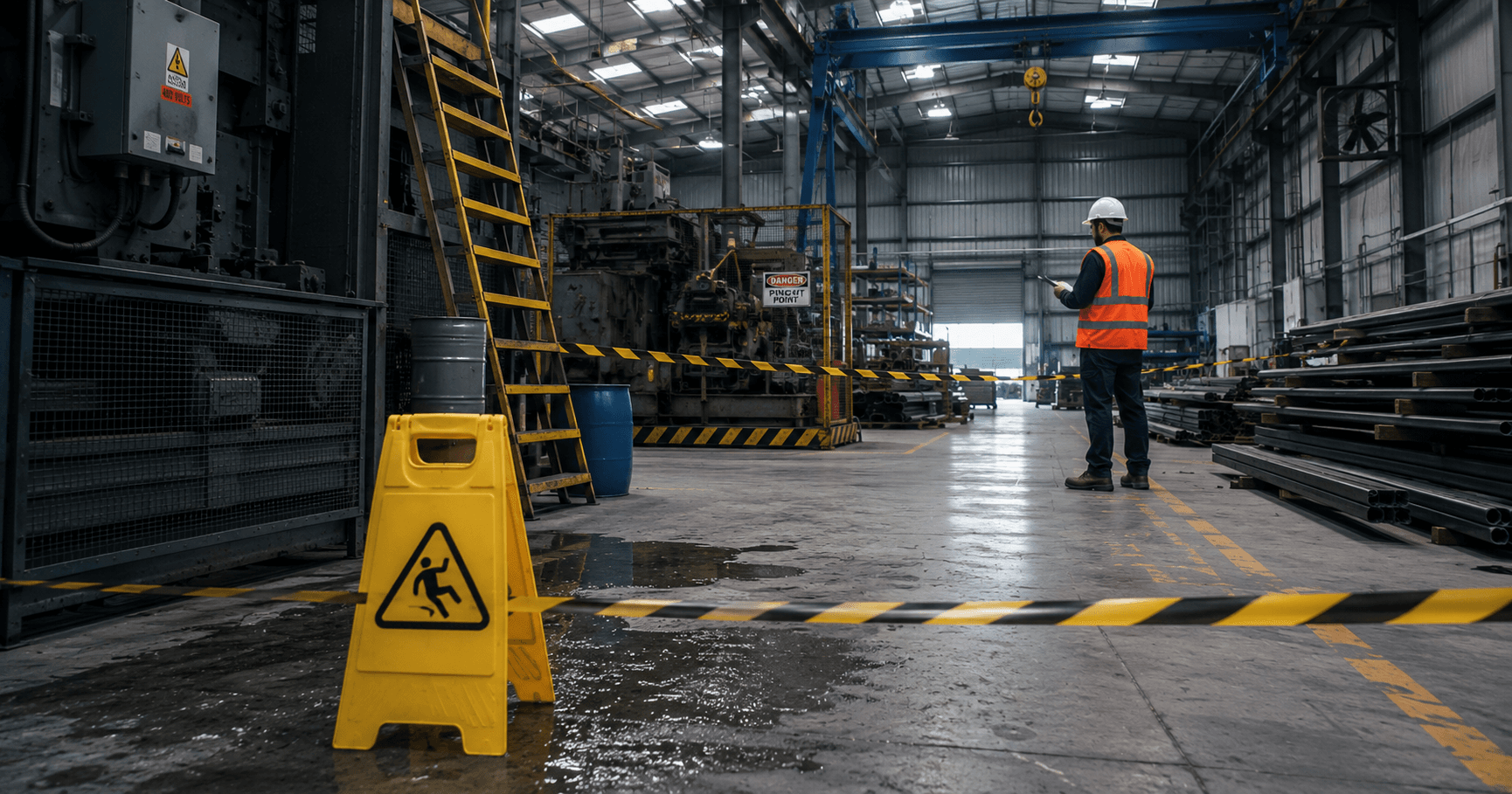
Every safety management system starts with the same question: what could go wrong here? Before you can control a risk, you have to be able to spot it. HSE officers are trained to scan a workplace and recognize hazard categories that untrained staff often walk right past.
The 10 Hazard Categories
Here are the hazard types that come up most often across industries:
- Physical hazards — noise, vibration, extreme temperatures, and radiation.
- Chemical hazards — exposure to fumes, solvents, and hazardous substances.
- Biological hazards — bacteria, viruses, and mould in certain work environments.
- Ergonomic hazards — poor posture, repetitive strain, and awkward workstation setups.
- Mechanical hazards — moving machinery parts, entanglement, and crush points.
- Electrical hazards — exposed wiring, overloaded circuits, and faulty equipment.
- Fire and explosion hazards — flammable materials and poor storage practices.
- Working-at-height hazards — falls from scaffolding, ladders, and rooftops.
- Psychosocial hazards — excessive workload, harassment, and workplace stress.
- Environmental hazards — poor ventilation, lighting, and housekeeping issues.
Why Training Makes the Difference
Untrained employees often normalize risk — a frayed cable or a blocked fire exit becomes part of the background. Certified HSE officers are trained to systematically walk through each hazard category during inspections rather than relying on instinct alone, which is exactly the skill NEBOSH and OSHA courses are built to develop.
Conclusion
Knowing these ten hazard categories by heart turns a routine walkthrough into a genuine risk assessment. It's the foundation every other part of an HSE officer's job — from control measures to compliance — is built on.
Learn to identify and control hazards like a pro
Build hazard identification skills through our NEBOSH and OSHA courses.